Balconies are an important part of modern homes, offering natural light, fresh air, and a connection to the outdoors. However, an open balcony can also expose your living space to dust, rain, outside noise, insects, and changing weather conditions. Choosing the right window system can help make your balcony more comfortable, functional, and visually appealing.
uPVC balcony windows are a popular choice for homeowners looking for durable, low-maintenance, and modern window solutions. Available in sliding, casement, fixed-glass, and combination designs, they can suit different balcony sizes, architectural styles, and ventilation requirements.
At JLM IMPEX PVT LTD, we understand the importance of combining design, practicality, and long-term performance. In this guide, we explore popular uPVC balcony window designs, their benefits, approximate prices, and the factors you should consider before buying.
What Are uPVC Balcony Windows?
uPVC stands for unplasticised polyvinyl chloride, a durable material widely used in modern windows and doors. uPVC balcony windows are designed to enclose or partially enclose balcony openings while allowing natural light and, where the design permits, ventilation.
They can be installed in apartments, independent houses, penthouses, and other residential properties. Depending on the available space and intended use, homeowners can choose from compact sliding windows, outward-opening casement windows, large fixed-glass panels, or combinations of fixed and operable sections.
These windows are available in different frame colours, glass specifications, and hardware configurations to complement contemporary interiors.
Before selecting a design, consider whether you want to improve weather protection, reduce outside noise, control dust, enhance privacy, or create a more enclosed balcony space.
Benefits of Installing uPVC Balcony Windows
1. Better Protection from Dust and Rain
Balconies facing roads, construction areas, or exposed outdoor spaces may collect dust and experience wind-driven rain.
A properly designed and installed uPVC window system can help reduce the amount of dust and rain entering the balcony. Actual performance depends on the window design, drainage provisions, seals, and installation quality.
2. Improved Thermal Comfort
Balconies can experience significant temperature changes, particularly when exposed to direct sunlight.
uPVC frames generally conduct less heat than conventional aluminium frames without thermal breaks. When combined with suitable glazing, they can contribute to better thermal comfort.
The overall result depends on the glass specification, frame design, orientation, shading, and the building's ventilation.
3. Potential Reduction in Outside Noise
Balconies facing busy roads, commercial areas, or neighbouring buildings may be exposed to unwanted noise.
uPVC windows with appropriate glazing and effective seals can help reduce outside noise. For better sound insulation, consider the complete window system rather than the frame material alone.
4. Low Maintenance
uPVC balcony windows generally do not require regular painting or polishing. Routine cleaning with mild soap and water is usually sufficient to maintain their appearance.
Periodic inspection of the hinges, rollers, locks, seals, and drainage openings helps keep the windows operating smoothly.
5. Modern and Elegant Appearance
uPVC windows are available in a range of designs that complement modern residential architecture.
White frames provide a clean, minimalist appearance, while selected systems offer alternative colours and finishes. Large glazed panels can also create a brighter balcony by allowing more natural light into the space.
6. Multiple Design Options
Different balcony layouts require different window configurations. uPVC systems offer several options, including:
Sliding windows for compact spaces.
Casement windows for wide opening areas.
Fixed-glass panels for uninterrupted views.
Combination windows for both daylight and ventilation.
Custom-sized windows for unusual openings.
7. Added Privacy and Insect Protection
Suitable glazing, curtains, blinds, or compatible mosquito mesh can help improve privacy and reduce insect entry when windows are open.
The appropriate solution depends on the balcony's location, exposure, and ventilation needs.
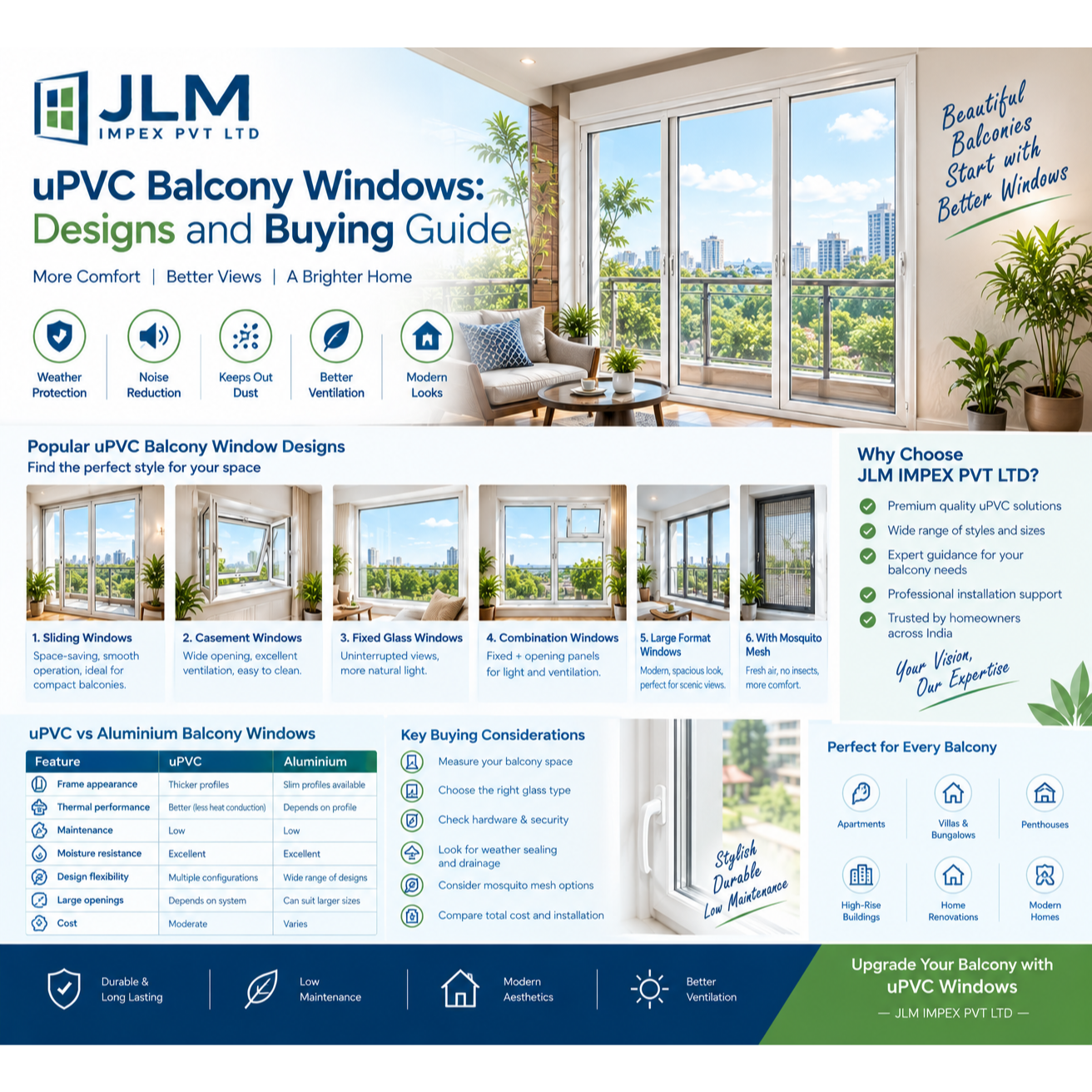
Popular uPVC Balcony Window Designs
Choosing the right design is essential for making the most of your balcony. Here are some popular options for modern homes.


1. uPVC Sliding Balcony Windows
Sliding windows operate by moving one or more panels horizontally along tracks. They do not swing inward or outward, making them useful where space is limited.
Key benefits:
Space-saving operation.
Convenient access to fresh air.
Modern appearance.
Suitable for compact balconies and apartments.
Best for: Small and medium-sized balconies where furniture or walkways limit the space available for opening windows.
2. uPVC Casement Balcony Windows
Casement windows are hinged at the side and open inward or outward, depending on the configuration. They can provide a wide opening for ventilation.
Key benefits:
Wide opening potential.
Convenient cleaning and maintenance.
Flexible design options.
Suitable for many residential layouts.
Best for: Balconies where sufficient clearance is available for the opening panels.
3. Fixed Glass Balcony Windows
Fixed windows do not open. They are designed primarily to provide natural light, views, and a more enclosed appearance.
Key benefits:
Uninterrupted outdoor views.
Clean and minimal appearance.
No moving window hardware.
Useful for combining with opening sections.
Best for: Balcony areas where ventilation is provided by other operable windows or doors.
4. Combination uPVC Balcony Windows
Combination windows include fixed sections alongside operable panels. This arrangement can provide a balance between views, daylight, and ventilation.
Key benefits:
Flexible configuration.
Better use of available wall space.
Multiple design possibilities.
Suitable for larger balcony openings.
Best for: Homeowners who want a combination of fixed glazing and opening windows.
5. Large-Format uPVC Balcony Windows
Large-format windows use wider or taller glazed sections to create a more open appearance. Their suitability depends on the profile system, structural requirements, glass specification, and dimensions.
Key benefits:
Contemporary architectural style.
Increased daylight potential.
Attractive views.
Suitable for selected larger openings.
Best for: Modern apartments, penthouses, and homes with balconies overlooking gardens or scenic views.
6. uPVC Balcony Windows with Mosquito Mesh
Windows fitted with a compatible mosquito mesh system can help limit insect entry while allowing air to circulate.
Key benefits:
Useful during warmer months.
Helps reduce mosquito entry.
Supports ventilation when windows are open.
Can be incorporated into selected sliding and other window configurations.
Best for: Balconies where fresh air is important but insects are a concern.
uPVC Balcony Windows Price in India
The price of uPVC balcony windows depends on the dimensions, profile quality, glass type, opening mechanism, hardware, colour finish, and installation requirements.
The following are indicative budgeting estimates, not verified current market quotations.
uPVC balcony window type | Approximate price |
|---|---|
Small sliding window | ₹250–₹450 per sq. ft. |
Standard sliding window | ₹300–₹600 per sq. ft. |
Casement window | ₹350–₹700 per sq. ft. |
Fixed-glass window | ₹250–₹500 per sq. ft. |
Large or customised window system | ₹450–₹900+ per sq. ft. |
Actual prices may vary significantly by supplier, profile specifications, glass, hardware, colour finish, installation, and project size. Some quotations include installation and accessories, while others price these separately.
Example: Estimated Cost for a Balcony Window
Suppose you need a uPVC sliding window measuring 6 feet wide and 4 feet high.
Width: 6 feet
Height: 4 feet
Total area: 24 square feet
Illustrative rate: ₹400 per square foot
Estimated basic cost:
24 × ₹400 = ₹9,600
This is only an illustrative calculation. It does not represent a confirmed quotation and may exclude installation, mesh, upgraded glass, taxes, and other charges.
For large balcony enclosures, the total cost can be considerably higher because of the number of panels, structural considerations, and installation complexity.
Factors That Affect the Cost of uPVC Balcony Windows
Before comparing quotations, understand what influences the final price.
1. Window Dimensions
Larger windows generally require more frame material and glass. Very wide or tall panels may also require specialised profiles or additional structural considerations.
2. Profile Quality
Different uPVC profiles vary in design, reinforcement requirements, and specifications. Ask your supplier about the profile system proposed for your project.
3. Glass Specification
Glass selection has a significant influence on both cost and performance. Options may include:
Standard clear glass.
Toughened safety glass.
Laminated glass.
Double-glazed units.
Solar-control or other specialised glazing.
The right choice depends on the location, safety requirements, noise exposure, and thermal performance goals.
4. Opening Mechanism
Sliding, casement, and fixed windows use different hardware and configurations. Sliding windows require suitable rollers and tracks, while casement windows require appropriate hinges and locking components.
5. Mosquito Mesh
Adding a compatible mesh system can increase the overall cost but may be useful for balconies where ventilation and insect protection are both priorities.
6. Installation and Finishing
Installation charges can depend on access, wall conditions, existing frames, sealing requirements, and the complexity of the balcony opening.
For high-rise apartments and large glazed openings, professional site assessment is particularly important.
How to Choose the Right uPVC Balcony Windows
Selecting the right window requires balancing design preferences with practical requirements.
1. Assess Your Balcony Size
Measure the available width and height and check whether the window will interfere with furniture, curtains, railings, or nearby structures.
Sliding windows may be preferable where space is restricted, while casement windows can work well where adequate opening clearance is available.
2. Decide Your Main Purpose
Identify what you want the windows to achieve.
Dust and rain protection: Consider appropriate sealing, drainage, and weather-resistant design.
Noise reduction: Evaluate suitable glazing and the complete window assembly.
Thermal comfort: Consider glazing, shading, and the balcony's exposure to sunlight.
Natural ventilation: Ensure enough operable window area is available.
Privacy: Consider glass opacity, blinds, curtains, and neighbouring sightlines.
3. Select Suitable Glass
For balconies exposed to direct sunlight, solar-control glazing may be worth considering. If outside noise is a concern, discuss glazing options designed for sound insulation.
Safety glazing may also be necessary depending on the window's location, size, and applicable building requirements.
4. Check Hardware and Security
Look for reliable locking systems, smooth operation, and hardware suited to the intended window configuration.
For accessible balconies, evaluate security needs without compromising emergency access or applicable safety requirements.
5. Consider Weather Exposure
Balconies can experience wind-driven rain, strong sunlight, and temperature changes. Ask the supplier how the proposed system handles water drainage, weather sealing, and local exposure conditions.
6. Choose the Right Colour and Finish
White is a common choice for uPVC windows, but other finishes may be available depending on the system. Select a finish that complements the building facade and interior.
7. Check Installation Quality
Even a high-quality window may perform poorly if installed incorrectly. Proper alignment, anchoring, sealing, and drainage are important for long-term operation.
8. Review Building Rules
For apartment balconies, check housing society requirements, building regulations, facade restrictions, and applicable fire-safety or emergency-access requirements before enclosing the balcony.
A window installation should not compromise required ventilation, drainage, structural safety, or emergency exits.
uPVC Balcony Windows vs Aluminium Balcony Windows
Both materials are widely used in modern homes. Your choice depends on the required appearance, opening size, budget, and performance expectations.
Feature | uPVC Windows | Aluminium Windows |
|---|---|---|
Frame appearance | Often thicker profiles | Slim-profile options available |
Thermal performance | Frames generally conduct less heat | Depends on the profile and thermal-break design |
Maintenance | Generally low | Generally low |
Moisture resistance | Resistant to moisture-related deterioration | Excellent corrosion resistance with suitable finishes |
Design flexibility | Multiple residential configurations | Wide range of contemporary profiles |
Large openings | Depends on system and panel dimensions | Can suit selected large-format designs |
Price | Depends on profile, glazing, and hardware | Depends on alloy, profile, finish, and hardware |
Which is better for your balcony?
uPVC is a practical option for homeowners seeking low-maintenance frames and good thermal properties. Aluminium can be attractive when slim profiles or particular large-format designs are priorities.
For larger balcony enclosures, compare the complete systems—including glass, hardware, weather performance, and installation—rather than choosing solely on frame material.
Maintenance Tips for uPVC Balcony Windows
Regular maintenance helps preserve window performance and appearance.
Clean the frames with mild soap and water.
Remove dust from sliding tracks.
Keep drainage openings clear where applicable.
Check rollers, hinges, handles, and locks periodically.
Inspect weather seals for wear or damage.
Clean the glass with a suitable non-abrasive cleaner.
Avoid harsh chemicals and abrasive cleaning tools.
Arrange professional inspection if panels become difficult to operate or leaks develop.
Routine maintenance is particularly important for balconies exposed to dust, rain, and strong winds.
Why Choose JLM IMPEX PVT LTD for uPVC Windows and Doors?
At JLM IMPEX PVT LTD, we focus on window and door solutions designed to combine modern aesthetics, practical functionality, and everyday convenience.
When selecting balcony windows, it is important to choose a configuration that suits the opening dimensions, ventilation requirements, privacy needs, and exposure to outdoor conditions.
Our uPVC and aluminium window and door solutions can be considered for new residential construction, apartment projects, and home renovation work.
Before finalising your order, discuss the following with your supplier:
Available profile systems and frame finishes.
Sliding, casement, and fixed-glass configurations.
Glass and mosquito mesh options.
Hardware and locking systems.
Weather sealing and drainage details.
Installation requirements and applicable warranty terms.
A well-planned window system can help transform a balcony into a more comfortable and attractive part of your home.
Frequently Asked Questions (FAQs)
1. Are uPVC windows suitable for balconies?
Yes. uPVC windows are suitable for many residential balconies because they are low-maintenance, resistant to moisture-related deterioration, and available in several configurations.
2. Which uPVC window design is best for a small balcony?
Sliding windows are often a practical choice because their panels move horizontally and do not require swing clearance. The final choice depends on ventilation needs and the available opening.
3. Can uPVC balcony windows reduce outside noise?
They can help reduce noise when specified with suitable glazing and effective seals. Actual performance depends on the entire window assembly and installation.
4. How much do uPVC balcony windows cost in India?
Indicative prices may start at approximately ₹250–₹450 per square foot for some basic configurations, while specialised or customised systems can cost considerably more. Always obtain a current, itemised quotation.
5. Which glass is best for balcony windows?
The best glass depends on the application. Toughened or laminated safety glass may be appropriate where safety is a concern, while double glazing or specialised glazing may be considered for thermal and acoustic performance.
6. Can I install mosquito mesh in uPVC balcony windows?
Yes. Compatible mosquito mesh systems are available for selected configurations, including some sliding windows. Confirm compatibility with your chosen frame and opening design.
7. Are uPVC balcony windows weatherproof?
A properly designed and installed system can help reduce wind-driven rain and dust entry. Performance depends on the window design, sealing, drainage, exposure, and installation quality.
8. Do I need permission to enclose my apartment balcony?
Possibly. Requirements vary according to local regulations, building rules, and housing society policies. Check the applicable requirements before beginning installation.
Conclusion
uPVC balcony windows offer a versatile solution for homeowners looking to improve comfort, functionality, and the appearance of their balconies. From space-saving sliding windows to casement and large fixed-glass designs, there are options for different architectural styles and practical needs.
Before making a purchase, consider your balcony dimensions, ventilation requirements, glass specification, weather exposure, and installation quality. Comparing complete quotations from reliable suppliers will help you choose a system that suits your home and budget.
Looking to upgrade your balcony with modern window solutions?
Contact JLM IMPEX PVT LTD to discuss your requirements and explore suitable uPVC and aluminium windows and doors for your residential project.
JLM IMPEX PVT LTD — Practical Window Solutions for Modern Homes.