uPVC Windows for High-Rise Apartments: Benefits, Designs, Prices & Buying Guide
Living in a high-rise apartment offers beautiful city views, natural daylight, and modern urban convenience. However, apartments located on higher floors can also experience strong winds, outside noise, dust, direct sunlight, and changing weather conditions. Choosing the right window system is essential for maintaining comfort, safety, and energy efficiency.
uPVC windows for high-rise apartments are a popular option for modern residential buildings because they offer low-maintenance frames, versatile designs, and compatibility with different glazing systems. From space-saving sliding windows to casement windows and large glazed panels, uPVC windows can be tailored to suit different apartment layouts and architectural styles.
At JLM IMPEX PVT LTD, we understand the importance of selecting window solutions that balance performance, appearance, and everyday convenience. This guide explains the benefits, popular designs, approximate prices, and important factors to consider before choosing uPVC windows for a high-rise apartment.
What Are uPVC Windows for High-Rise Apartments?
uPVC stands for unplasticised polyvinyl chloride, a durable material widely used in modern window and door systems.
In high-rise apartments, windows need to do more than improve the appearance of a room. They must also be suitable for the building's exposure to wind, rain, sunlight, and outside noise.
uPVC window systems are available in various configurations, including:
uPVC sliding windows
uPVC casement windows
Fixed-glass windows
Tilt-and-turn windows, where suitable systems are available
Combination windows with fixed and opening sections
Large-format glazed window systems
The most appropriate configuration depends on the window opening, building design, ventilation requirements, glass specification, and applicable safety regulations.
For high-rise installations, the complete window assembly—including the frame, glass, hardware, anchoring, and installation—must be selected carefully.
Why Are uPVC Windows Suitable for High-Rise Apartments?
1. Helps Reduce Outside Noise
High-rise apartments in busy cities may be exposed to traffic, construction, aircraft, and neighbourhood noise.
uPVC windows fitted with suitable glazing and effective seals can help reduce unwanted sound entering the home. Acoustic performance depends on the glass thickness and configuration, frame design, installation quality, and gaps around the window.
For apartments near busy roads, consider discussing laminated acoustic glass or other suitable sound-insulation options with your supplier.
2. Improved Thermal Comfort
Apartments with large windows can experience heat gain during summer and heat loss during cooler weather.
uPVC frames generally conduct less heat than conventional aluminium frames without thermal breaks. When combined with suitable glazing, they can contribute to improved thermal comfort.
Double glazing, solar-control glass, shading, and appropriate window orientation may further improve performance, depending on local conditions.
3. Protection Against Dust and Wind-Driven Rain
Higher floors can experience stronger wind exposure than ground-level properties. Dust and wind-driven rain may enter through poorly sealed windows.
A properly specified and installed uPVC window system can help reduce air and water infiltration. Performance depends on the complete system, including weather seals, drainage design, hardware, installation, and the building's exposure.
For high-rise apartments, always confirm that the selected system is suitable for the expected wind loads and weather conditions.
4. Low Maintenance
uPVC windows generally require less routine maintenance than many traditional window materials. They do not require regular painting or polishing, and their surfaces can usually be cleaned with mild soap and water.
Periodic checks of hinges, rollers, handles, locking systems, and seals help keep them functioning properly.
5. Modern and Attractive Designs
Contemporary apartments often feature large openings, open-plan interiors, and balconies with city views.
uPVC windows are available in multiple configurations and selected frame finishes to complement modern interiors. White frames are popular, while some systems offer additional colour or wood-effect finishes.
The right design can help create a bright and visually appealing living space.
6. Energy Efficiency Potential
Windows play an important role in the thermal performance of a home. Suitable uPVC frames and glazing can help reduce unwanted heat transfer, potentially supporting more comfortable indoor temperatures and lower cooling or heating demand.
Actual energy savings depend on the building envelope, glass specification, climate, orientation, shading, and air leakage.
7. Convenient Operation
Sliding windows are useful in rooms where inward or outward opening panels could interfere with furniture or curtains. Casement windows may provide a wider opening where adequate clearance is available.
Selecting the correct operating style makes everyday ventilation and cleaning more convenient.
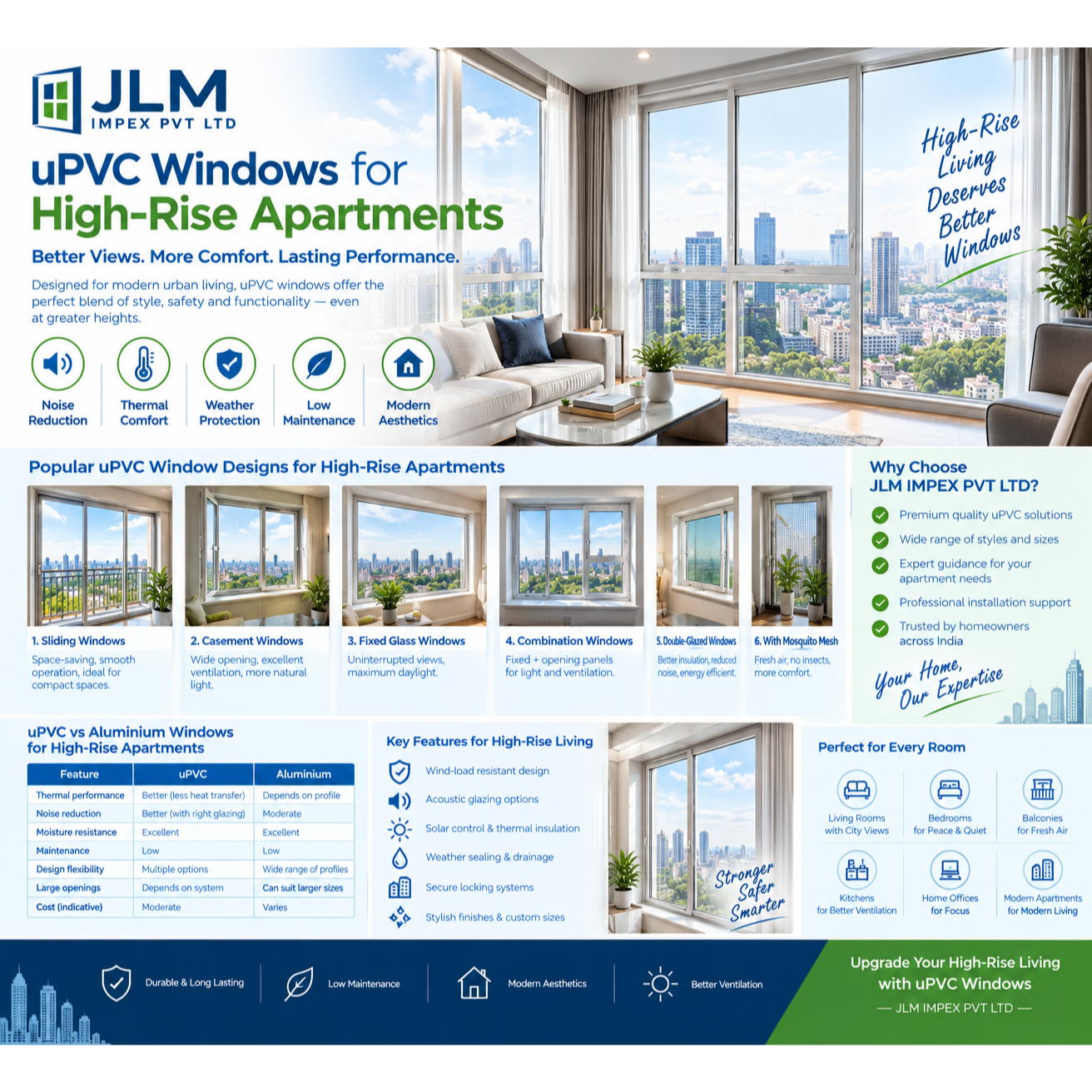
Best uPVC Window Designs for High-Rise Apartments
The best window design depends on the apartment's layout, available space, view, ventilation needs, and building requirements.


1. uPVC Sliding Windows
Sliding windows operate by moving one or more panels horizontally along tracks. They do not require swing clearance, making them suitable for compact rooms and apartments.
Key benefits:
Space-saving operation.
Convenient for bedrooms and living rooms.
Suitable for many balcony openings.
Modern appearance with wide glazed sections.
Best for: Apartments where space efficiency and easy operation are priorities.
For high-rise applications, ensure the selected sliding system has appropriate locking, panel retention, and wind-load performance.
2. uPVC Casement Windows
Casement windows are hinged at the side and open inward or outward, depending on the design.
Key benefits:
Wide opening potential.
Good ventilation when conditions permit.
Multiple configuration options.
Suitable for selected bedroom and living-room openings.
Best for: Apartments where a larger opening is desirable and adequate clearance is available.
In high-rise buildings, opening direction, restrictors, hardware, and external safety requirements must be considered carefully.
3. Fixed-Glass Windows
Fixed windows do not open and are designed primarily to provide daylight and views.
Key benefits:
Uninterrupted views.
Minimal moving hardware.
Clean architectural appearance.
Can be combined with opening sections.
Best for: Living rooms and other areas where ventilation is provided by separate operable windows or doors.
Large fixed-glass installations require careful consideration of glass safety, structural support, wind loads, and the building's facade requirements.
4. Double-Glazed uPVC Windows
Double-glazed windows use two panes of glass separated by a sealed cavity. The overall performance depends on the glass specification, cavity design, frame, and installation.
Key benefits:
Potentially improved thermal insulation.
Can help reduce outside noise when appropriately specified.
Useful for selected climate and acoustic requirements.
Best for: Apartments exposed to significant outside noise or temperature fluctuations.
Double glazing is not automatically the best solution for every apartment. Compare the expected performance and cost with your specific requirements.
5. Combination uPVC Windows
Combination windows use fixed and operable panels within one design.
Key benefits:
Balances views and ventilation.
Flexible layouts for different rooms.
Can accommodate different opening sizes.
Best for: Large living-room openings and apartment layouts requiring both fixed glazing and opening sections.
6. uPVC Windows with Mosquito Mesh
Compatible mosquito mesh systems can help reduce insect entry when the windows are open.
Key benefits:
Supports comfortable ventilation.
Useful during warmer months.
Available for selected sliding and other window systems.
Best for: Apartments where insects are a concern and natural ventilation is frequently used.
uPVC Windows Price in India for High-Rise Apartments
The price of uPVC windows depends on dimensions, profile specifications, glazing, opening mechanism, hardware, frame finish, and installation requirements.
The following figures are indicative budgeting estimates, not verified current market quotations.
uPVC window type | Approximate price |
|---|---|
Basic fixed window | ₹250–₹500 per sq. ft. |
Standard sliding window | ₹300–₹600 per sq. ft. |
Casement window | ₹350–₹700 per sq. ft. |
Double-glazed window system | ₹450–₹900+ per sq. ft. |
Large or customised window system | ₹450–₹1,000+ per sq. ft. |
Actual rates may vary significantly depending on the profile system, glass specification, hardware, project quantity, location, installation, and safety requirements. Large-format high-rise windows may require specialised systems that fall outside these indicative ranges.
Example: Estimated Cost for an Apartment Window
Suppose you need a uPVC sliding window measuring 5 feet wide and 4 feet high.
Width: 5 feet
Height: 4 feet
Total area: 20 square feet
Illustrative rate: ₹400 per square foot
Estimated basic cost:
20 × ₹400 = ₹8,000
This is an illustrative calculation only. It is not a confirmed quotation and may exclude installation, mesh, upgraded glazing, taxes, and other charges.
For an apartment with several windows and balcony openings, the total project cost will depend on the number of units, their dimensions, and the selected specifications.
Factors That Affect the Cost of High-Rise uPVC Windows
1. Window Size and Configuration
Larger windows require more frame material and glass. Wide or tall panels may also need specialised profiles, hardware, or structural considerations.
2. Glass Type
Glass selection affects cost, safety, thermal performance, and sound insulation.
Common options include:
Clear glass.
Toughened safety glass.
Laminated glass.
Double-glazed units.
Solar-control glass.
Specialised acoustic glazing.
For high-rise buildings, the glass specification must be suitable for the installation location and applicable building requirements. Toughened and laminated glass serve different purposes, so the correct type should be selected based on the risk and design.
3. Profile Specifications
Different uPVC profile systems have different dimensions, internal configurations, reinforcement requirements, and performance characteristics.
Ask your supplier for the specifications of the proposed system rather than comparing prices based only on the term “uPVC window.”
4. Hardware and Locking Systems
Sliding rollers, hinges, handles, locks, and other components influence both cost and everyday performance.
For higher floors, hardware and panel retention should be appropriate for the window design and expected wind exposure.
5. Glazing and Additional Features
Double glazing, solar-control glass, mosquito mesh, specialised finishes, and additional security features may increase the final price.
6. Installation Complexity
High-rise projects can involve access restrictions, facade coordination, safety procedures, and specialised installation requirements.
These factors may affect labour costs and the installation schedule.
Important Safety Considerations for uPVC Windows in High-Rise Buildings
High-rise windows require more attention to safety than many ground-level installations. The frame material alone does not determine whether a window is safe for a particular floor or opening.
Before installation, consider the following:
Wind-load performance: Ensure the complete window system is suitable for the expected wind pressure at the building's height and location.
Glass safety: Choose glazing that complies with applicable building requirements for the window's size, position, and exposure.
Secure anchoring: The frame must be fixed to the building structure using suitable installation methods and hardware.
Panel retention: Sliding and opening panels must be properly retained and secured.
Opening restrictors: Where appropriate and permitted, restrictors can help control how far an operable window opens.
Building regulations: Confirm compliance with applicable codes, facade specifications, and housing society rules.
Professional installation: Use qualified installers familiar with high-rise window systems.
Never assume that a standard residential window is automatically suitable for a high-rise installation. A project-specific assessment is important, particularly for large windows and exposed elevations.
How to Choose the Right uPVC Windows for Your Apartment
1. Assess Your Apartment's Location
Consider the floor level, direction the windows face, exposure to sunlight, nearby traffic, and prevailing weather conditions.
Apartments facing busy roads may prioritise acoustic glazing, while sun-exposed rooms may benefit from suitable solar-control glass and shading.
2. Decide on Your Main Requirement
Identify what matters most for your home:
Noise reduction.
Thermal comfort.
Natural ventilation.
Dust and rain protection.
Better views.
Privacy and security.
Your priorities will help determine the frame configuration and glass specification.
3. Choose the Correct Opening Style
Sliding windows suit many compact spaces, while casement windows may provide wider openings where permitted and appropriate.
For high-rise apartments, the opening method must also account for safety, wind exposure, and cleaning access.
4. Select Suitable Glazing
Do not select glass based on price alone. Consider thermal performance, sound insulation, safety, and the size and position of each window.
For large or exposed openings, confirm the glazing specification with a qualified professional.
5. Check the Building's Requirements
Some residential complexes specify approved window colours, frame designs, glazing types, and facade treatments. Confirm these requirements before ordering windows.
6. Compare Complete Quotations
Ask suppliers to specify the profile system, glass type, hardware, installation, sealing, and applicable warranty terms. This makes it easier to compare different offers fairly.
7. Plan Cleaning and Maintenance
High-rise windows can be difficult to access from outside. Consider how the glass and frames will be cleaned safely and whether the proposed opening configuration supports practical maintenance.
Never lean out of a window or attempt unsafe external cleaning.
uPVC Windows vs Aluminium Windows for High-Rise Apartments
Both uPVC and aluminium are used in modern residential buildings. The best option depends on the building design, panel dimensions, performance requirements, and budget.
Feature | uPVC Windows | Aluminium Windows |
|---|---|---|
Frame appearance | Often thicker profiles | Slim-profile options available |
Thermal performance | Frames generally conduct less heat | Depends on whether thermal breaks are used |
Maintenance | Generally low | Generally low |
Moisture resistance | Resistant to moisture-related deterioration | Excellent corrosion resistance with suitable finishes |
Design flexibility | Multiple residential configurations | Wide range of architectural profiles |
Large-format applications | Depends on system and panel size | Can suit selected large-format applications |
Cost | Depends on profile, glass, and hardware | Depends on alloy, profile, finish, and hardware |
Which is better for high-rise apartments?
uPVC can be a good choice for many residential windows where thermal comfort and low maintenance are priorities. Aluminium may be preferred for certain slim-profile or large-format applications.
However, neither material should be selected on appearance or price alone. The complete system must meet the building's structural, wind-load, glazing, and safety requirements.
Maintenance Tips for uPVC Windows in High-Rise Apartments
Proper maintenance helps preserve the performance and appearance of your windows.
Clean the frames with mild soap and water.
Remove dust from sliding tracks and drainage openings.
Check handles, rollers, hinges, and locks periodically.
Inspect seals for visible wear or damage.
Avoid abrasive cleaning tools and harsh chemicals.
Follow the manufacturer's guidance for hardware maintenance.
Arrange professional inspection if windows become difficult to operate or show signs of leakage.
For high-rise apartments, maintenance should always be performed safely. Use qualified professionals for any work that requires external access.
Why Choose JLM IMPEX PVT LTD for uPVC Windows and Doors?
At JLM IMPEX PVT LTD, we focus on window and door solutions designed to combine modern aesthetics with practical functionality.
For apartment projects, choosing the right system involves considering window dimensions, opening style, glazing, ventilation needs, and installation requirements.
Our uPVC and aluminium window and door solutions can be considered for new residential construction, apartment developments, and home renovation projects.
When discussing your requirements with a supplier, ask about:
Available profile systems and finishes.
Sliding, casement, and fixed-glass configurations.
Suitable glazing options.
Hardware and locking specifications.
Weather sealing and drainage details.
Installation requirements and applicable warranty terms.
For high-rise applications, confirm that the selected system is suitable for the building's specific wind-load, glass-safety, and facade requirements.
Frequently Asked Questions (FAQs)
1. Are uPVC windows suitable for high-rise apartments?
Yes, suitable uPVC window systems can be used in high-rise apartments. The complete assembly must be designed and installed to meet the building's wind-load, glazing, anchoring, and safety requirements.
2. Which uPVC window design is best for an apartment?
Sliding windows are popular for compact spaces because they do not require swing clearance. Casement and combination windows may be suitable where ventilation and opening requirements differ.
3. Can uPVC windows reduce outside noise in high-rise buildings?
They can help reduce outside noise when combined with suitable glazing and effective seals. The actual reduction depends on the complete window assembly and installation quality.
4. Are double-glazed uPVC windows worth considering?
Double glazing may be useful where thermal comfort or noise reduction is a priority. Its value depends on the local climate, outside noise levels, glass specification, and overall project budget.
5. How much do uPVC windows cost for high-rise apartments?
Indicative prices may start at around ₹250–₹500 per square foot for some basic fixed-window configurations, while specialised or customised systems can cost substantially more. Obtain a current, itemised quotation for an accurate estimate.
6. Are uPVC windows low-maintenance?
Yes. They generally require routine cleaning and periodic checks of their hardware and seals, rather than regular painting or polishing.
7. Can uPVC windows withstand strong winds at higher floors?
Only if the complete window system is appropriately specified, tested where required, securely anchored, and correctly installed for the expected wind loads. Not every standard window is suitable for every high-rise application.
8. Is toughened glass necessary for high-rise apartment windows?
The appropriate glass depends on the window's location, dimensions, exposure, and applicable safety requirements. Toughened and laminated glass have different properties, so consult a qualified professional to select the correct specification.
9. Can uPVC windows be customised for apartment interiors?
Many systems offer different sizes, opening configurations, and finishes. Customisation must remain within the selected system's design limits and applicable building requirements.
Conclusion
uPVC windows for high-rise apartments offer a combination of modern design, low-maintenance frames, and flexible glazing options. When appropriately specified, they can contribute to better thermal comfort, reduced outside noise, and improved protection against dust and rain.
The most important step is to choose a complete window system suited to your apartment's height, exposure, opening dimensions, and safety requirements. Consider the profile, glass, hardware, installation, and maintenance needs before making a final decision.
Looking for modern window solutions for your apartment or residential project?
Contact JLM IMPEX PVT LTD to discuss your requirements and explore suitable uPVC and aluminium windows and doors for your home.
JLM IMPEX PVT LTD — Practical Window Solutions for Modern Homes