A kitchen can have beautiful cabinets, premium appliances and an elegant countertop, but if the ventilation is poor, the space can still feel uncomfortable.
Cooking produces heat, steam, moisture, odours and airborne particles. An exhaust chimney helps manage cooking fumes, but a well-positioned window can provide something mechanical systems cannot completely replace: natural airflow and daylight.
This is why selecting the right uPVC kitchen windows in Ghaziabad deserves more attention than simply deciding the frame colour.
For independent houses, villas and builder floors, the ideal kitchen window depends on the layout.
A window above a sink needs a different opening mechanism from one positioned on a completely free exterior wall. A kitchen facing a narrow setback may have different airflow from one facing a garden.
The objective should therefore be:
Natural ventilation + daylight + practical operation + insect control + easy maintenance.
Let's understand how to achieve that.
Why Is Natural Ventilation Important in a Kitchen?
Cooking can quickly change the indoor environment.
Steam from boiling food adds moisture.
Gas cooking and frying generate heat and cooking by-products.
Strong spices and frying can leave lingering odours.
Natural ventilation allows indoor air to exchange with outdoor air when conditions permit.
An openable kitchen window can help:
Release warm air
Remove cooking odours
Reduce stuffiness
Introduce fresh outdoor air
Improve daylight
Complement mechanical extraction
However, a window should complement—not automatically replace—an appropriate kitchen chimney or exhaust system.
Why Consider uPVC for Kitchen Windows?
Kitchen windows are exposed to a combination of moisture, cooking residue and frequent cleaning.
uPVC can be a practical frame material because it generally requires relatively little routine maintenance and does not require periodic repainting like traditional painted timber.
Depending on the selected system, uPVC windows can also support:
Sliding designs
Casement designs
Tilt-and-turn configurations
Top-hung openings
Fixed + operable combinations
Mosquito mesh
Different glass specifications
The best design depends on where the window sits within the kitchen.
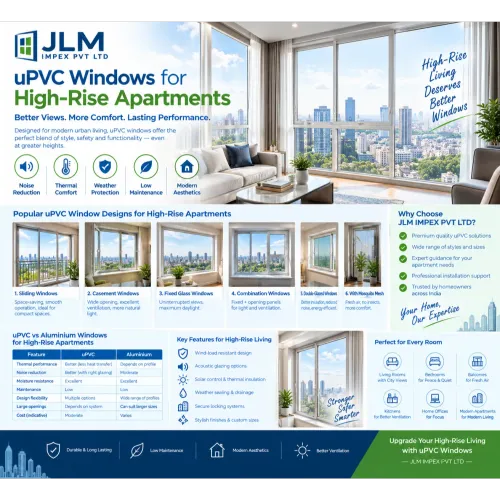
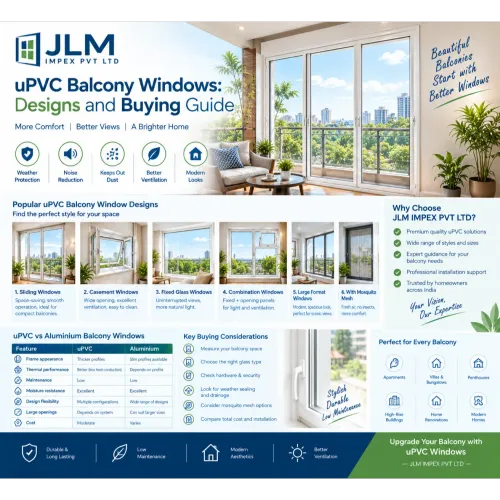
1. Casement uPVC Windows: Excellent for Natural Airflow
If ventilation is the main priority and there is enough opening clearance, casement windows deserve serious consideration.
A casement sash is hinged on one side and opens outward or inward depending on the system.
When opened widely, it can provide a relatively generous ventilation opening.
This makes casement windows useful for kitchens with a clear exterior wall.
They can work particularly well in:
Independent houses
Villas
Larger builder-floor kitchens
Kitchens facing gardens or open setbacks
The limitation is clearance.
An outward-opening shutter should not interfere with pipes, exterior structures or narrow passages.
2. Sliding uPVC Kitchen Windows
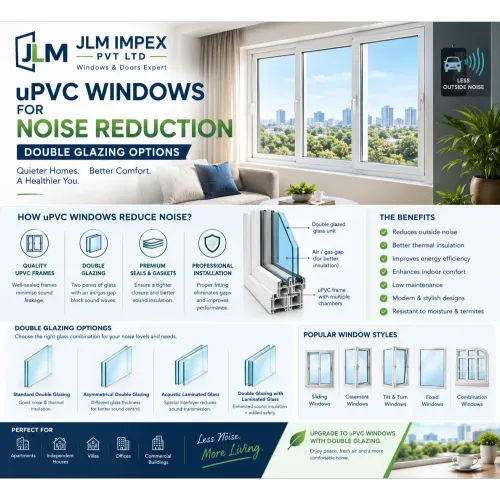
Sliding windows are often more practical in compact kitchens.
The shutters move horizontally and do not project over the countertop or into the room.
This makes them useful above:
Kitchen sinks
Counters
Utility areas
They are particularly suitable when opening space is restricted.
The trade-off is that conventional sliding configurations do not open the entire width at once.
If maximum ventilation is your priority, compare the effective opening area with casement options.
3. Top-Hung Windows for Compact Kitchens
A top-hung window can work well when the available opening is relatively small or positioned high on the wall.
The sash opens outward from the bottom.
This can provide controlled airflow without requiring a large window.
It may be useful above utility areas or in kitchens where upper cabinets leave only a limited opening.
4. Tilt-and-Turn Kitchen Windows
Tilt-and-turn windows provide two operating modes.
Tilt mode: the upper part of the sash opens inward for controlled ventilation.
Turn mode: the sash opens more fully for stronger ventilation and easier access to the glass.
This flexibility can work particularly well in premium kitchens where both regular ventilation and easy cleaning are priorities.
However, inward-turning operation requires interior clearance.
Check cabinets, faucets and countertops before choosing this configuration.
5. Fixed + Casement Combination
A wide kitchen window does not necessarily need every panel to open.
Consider:
Fixed | Casement | Fixed
The fixed sections can bring in daylight while the opening section provides ventilation.
This can create a clean appearance while keeping the number of moving shutters manageable.
6. Sliding Window with Mosquito Mesh
If you regularly keep the kitchen window open, mosquito mesh can be highly useful.
A compatible sliding mesh shutter can reduce insect entry while allowing airflow.
Plan the mesh during window design rather than adding it later.
Ask about:
Mesh material
Airflow
Visibility
Cleaning
Removal
Replacement
Where Should a Kitchen Window Be Positioned?
Window position can matter as much as window size.
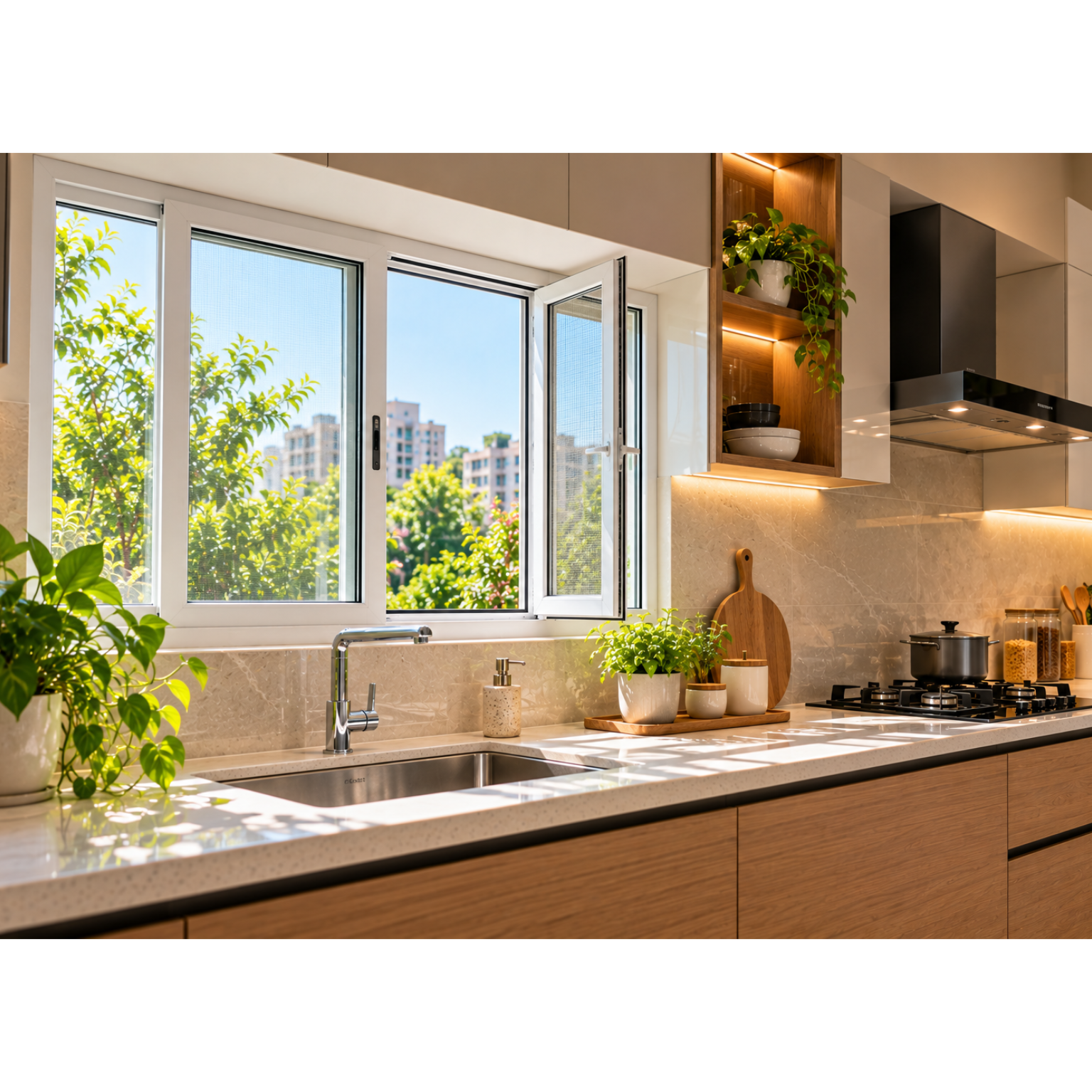
Above the Sink
This is a popular position because the wall above the sink often remains free from major appliances.
A sliding window can be particularly convenient because it does not swing toward the faucet.
Near the Cooking Zone
A window can support ventilation, but its location should not create problematic air currents around the cooking flame or interfere with the chimney arrangement.
On an Adjacent Exterior Wall
If possible, a window away from the cooking hob can provide fresh-air intake while the chimney extracts cooking fumes.
This can create a more practical airflow path.
Cross Ventilation: The Better Approach
A single window allows air exchange.
Two openings positioned strategically can create stronger cross ventilation.
For example:
Kitchen window → kitchen → utility/balcony opening
or
Kitchen window → dining/living opening
Air movement depends on wind direction, pressure and layout, but providing a path for air to enter and exit can improve natural ventilation.
Kitchen Chimney vs Window: Do You Need Both?
Often, yes.
They perform different functions.
Kitchen Chimney
Designed to capture cooking fumes, grease and vapour close to the cooking source.
Window
Provides general natural ventilation and outdoor air exchange.
A window should not be treated as a substitute for effective extraction directly above a high-use cooking area.
A well-designed kitchen can use both.
Kitchen Windows for Ghaziabad Builder Floors
Builder-floor kitchens can be relatively compact and may face a narrow rear setback or shaft.
In these spaces, sliding or top-hung windows can be particularly practical.
If airflow outside the window is limited, the window alone may not provide sufficient ventilation.
Mechanical extraction becomes more important.
Kitchen Windows for Independent Homes
Independent houses often offer greater flexibility.
A kitchen may face:
Garden
Side setback
Backyard
Utility courtyard
This allows larger casement or combination windows.
If the kitchen faces a garden, a broad clear-glass window can also make the room feel brighter and more connected to the outdoors.
Windows for Modular Kitchens
Plan the window before finalising cabinetry.
Check:
Countertop height
Sink location
Upper cabinets
Faucet height
Chimney duct
Window handle
Opening direction
One of the most common design mistakes is selecting a beautiful window that cannot open properly after the modular kitchen is installed.
What Glass Is Best for a Kitchen Window?
Clear Glass
A practical choice when daylight and exterior visibility are priorities.
Frosted Glass
Useful when the kitchen faces a neighbouring property or service area and privacy matters.
Toughened Glass
May be considered depending on window dimensions and safety requirements.
Double Glazing
Can be considered where thermal or acoustic performance is important.
The glass should be selected according to the opening rather than assuming every kitchen needs the same specification.
Can Kitchen Windows Help With Heat?
Natural ventilation can help release accumulated warm air when outdoor conditions are favourable.
However, the window can also become a source of solar heat if it receives strong direct sunlight.
For sun-exposed kitchens, consider:
Orientation
Shading
Glass
Window size
Ventilation
A large west-facing glass window may need a different strategy from a shaded north-facing opening.
What About Ghaziabad Dust?
When closed, a properly fabricated and installed window can help limit dust infiltration through the opening.
However, when the kitchen window is opened for ventilation, outdoor air and dust can naturally enter.
This creates a practical trade-off.
On dusty days, you may rely more heavily on mechanical ventilation and keep windows closed.
Cleaning Kitchen uPVC Windows
Kitchen windows can collect grease and airborne residue faster than bedroom windows.
Clean regularly:
Frame surfaces
Glass
Tracks
Mesh
Handles
Drainage openings
For sliding windows, debris in the track can also affect smooth operation.
Price Factors
The price of a uPVC kitchen window depends on:
Opening size
Profile
Window type
Glass
Reinforcement
Hardware
Mosquito mesh
Finish
Installation
Don't compare quotations solely on price per square foot.
Compare the complete specification.
Kitchen Window Buying Checklist
Before placing an order, confirm:
Where will the window be positioned?
Which direction will it open?
Will the faucet interfere?
Will cabinets interfere?
Is mosquito mesh required?
How much ventilation do you need?
Is privacy important?
What glass is included?
Is mechanical exhaust also planned?
How will the window be cleaned?
Why Choose JLM IMPEX for uPVC Kitchen Windows in Ghaziabad?
JLM IMPEX manufactures customised uPVC doors and windows for residential applications.
For Ghaziabad kitchens, the window can be planned according to opening size, kitchen layout, cabinetry, ventilation requirements, glass and mosquito-mesh preference.
This is particularly useful for independent homes and builder floors, where kitchen layouts and window openings can differ substantially.
Final Thoughts
A good uPVC kitchen window in Ghaziabad should do more than bring daylight into the room.
It should help the kitchen breathe.
For maximum natural ventilation, evaluate casement and other wider-opening configurations.
For compact countertops and sink areas, sliding windows may be more practical.
For regular airflow with insect protection, plan mosquito mesh from the beginning.
Most importantly, coordinate:
Window + chimney + cabinetry + sink + airflow.
When these elements work together, the kitchen can feel brighter, fresher and more comfortable throughout everyday use.
Frequently Asked Questions
1. Which uPVC window is best for kitchen ventilation?
Casement windows can provide a generous opening, while sliding and tilt-and-turn configurations may suit kitchens with different space constraints.
2. Are sliding windows good above a kitchen sink?
Yes. They can be convenient because the shutters do not project over the sink or faucet.
3. Do I need a chimney if my kitchen has a large window?
A window provides general ventilation, while a chimney captures cooking fumes near the cooking source. Many kitchens benefit from both.
4. Can mosquito mesh be installed?
Yes, compatible mesh solutions can be incorporated depending on the window configuration.
5. Which glass is best for a kitchen?
Clear glass is useful for daylight, while privacy glass may suit exposed locations. Other glass specifications depend on safety, heat and noise requirements.
6. Are uPVC windows easy to clean in a kitchen?
The frames are generally straightforward to clean, although kitchen grease and tracks require regular maintenance.
7. Can I install a casement window above the sink?
Yes, provided the opening direction, faucet and countertop layout allow convenient operation.
8. Can uPVC kitchen windows reduce dust?
When closed, appropriate fabrication and sealing can help limit infiltration through the opening.
9. Is a top-hung window suitable for a kitchen?
It can work well for smaller or higher-level openings.
10. Can I use frosted glass in my kitchen?
Yes, particularly where privacy is required.
11. Is double glazing necessary?
Not always. Consider it where thermal or acoustic requirements justify it.
12. When should I plan the window in a modular kitchen?
Ideally before cabinetry, sink, faucet and chimney locations are finalised.
13. Can a kitchen window improve natural light?
Yes. Window size, position, glass and exterior obstructions determine how much daylight enters.
14. What affects the price?
Window size, profile, opening style, glass, reinforcement, hardware, mesh and installation all influence the quotation.